Tend
Pet health records for adopted animals.
Every adopted pet deserves a history.
Role
Founder, solo
Period
2025
Market
Pet adoption, Argentina
Status
Paused
Adopted pets arrive without a past
Every year, thousands of pets are adopted from shelters across Argentina. Most arrive at their new homes without any medical record: no vaccination history, no deworming dates, no prior conditions.
Shelters do their best, but they operate with limited resources. Medical records, when they exist, live in paper folders or fragmented spreadsheets. When an animal is adopted, that information rarely makes it to the adopter in any usable form.
The adopter walks into their first vet visit with nothing. The vet starts from scratch. Vaccinations get repeated. Conditions get missed. The pet's health story begins on adoption day, when it should continue from it.
“The first thing I ask adopters is: do you have any records? They almost never do.”
Veterinarian
Day zero is adoption day.
That's when the record should begin.
The core insight from our research: the adoption moment is the only point where all stakeholders are connected. The shelter has the animal's history. The adopter is motivated and engaged. The handoff is happening.
If you capture and transfer the record at that exact moment, you create continuity of care that benefits everyone downstream: the adopter, the vet, and most importantly, the animal.
Tend is built around this moment. Everything else follows from it.
WhatsApp-first by design
Shelter creates the record
At adoption, the shelter enters the pet's known history (vaccinations, conditions, treatments) into Tend. Takes under 5 minutes.
Adopter receives via WhatsApp
The adopter gets a link to their pet's health record on WhatsApp. No app download. No account creation. Just a link that works.
Vet gets instant context
At the first vet visit, the adopter shares the record. The vet sees the full history and can add to it, creating a living document.
Record grows over time
Every visit, every vaccine, every note gets added. The pet's health record becomes complete, not fragmented across clinics.
Stakeholder Breakdown
Shelters
Need: Quick handoff, minimal admin overhead
Decision they face: Which animals are ready, and how to communicate their state without overstating health
Benefit: Automated record transfer at adoption, post-adoption visibility
Adopters
Need: Know what their pet needs, when
Decision they face: What to ask the vet, what to expect, what to budget for
Benefit: Clear health timeline, vaccination reminders, vet-ready records
Veterinarians
Need: Context on first visit
Decision they face: What to verify, what to repeat, what to trust
Benefit: Full history before examination, no guesswork
Mapping the ecosystem
12+
Stakeholder interviews
4
Shelters consulted
3
Veterinarians spoken to
5
Adopters interviewed
Key Findings
Shelters track health data inconsistently: some use spreadsheets, some use paper, some use nothing.
Adopters want to do the right thing but don't know what questions to ask at the first vet visit.
Vets waste the first 10–15 minutes of an adopted pet's visit trying to reconstruct unknown history.
WhatsApp is the default communication channel between shelters and adopters in Argentina.
The adoption moment is the highest-trust, highest-engagement touchpoint, and it's currently wasted.
Key product decisions
B2C or B2B?
B2B2C: start with shelters
Adopters won't seek out a health record app on their own. But if the shelter hands them one at adoption, it becomes a natural part of the experience. Shelters are the distribution channel.
Build an app or use existing channels?
WhatsApp-first
In Argentina, WhatsApp is already how shelters communicate with adopters. Building a native app would add friction. A WhatsApp-based flow meets people where they already are.
Charge adopters or shelters?
Neither, at first
Shelters run on donations. Adopters just took on a financial responsibility. The initial model is free for both. Revenue comes later, likely through vet partnerships or premium features.
How we think about Tend
The record is a gift
The health record isn't a burden or an obligation. It's something the shelter gives the adopter: a gesture of care that extends beyond the shelter's walls. This framing changes everything about how the product feels.
Visibility, not control
Shelters want to know their animals are doing well after adoption, but they don't want to police adopters. Tend gives shelters visibility into post-adoption health without creating a surveillance dynamic.
Meet the complexity. Reveal it carefully.
The pet health ecosystem is messy: different vaccines, different schedules, different species, different regulations by region. The product calibrates how much of that complexity to show, depending on who is looking. Adopters need it absorbed. Vets need it surfaced and navigable.
Provenance over polish
Every piece of data shows where it came from. Vets and adopters need to know what's verified, what's reported by the shelter, and what's missing. Trust comes from traceability, not from a clean interface that hides its sources.
Reframing the Experience
| Aspect | Traditional | With Tend |
|---|---|---|
| Record creation | Admin task for the shelter | Gift from shelter to adopter |
| First vet visit | Start from scratch | Continue the story |
| Post-adoption | Shelter loses visibility | Shelter stays informed |
| Health data | Scattered across clinics | One living document |
| Data trust | Implicit, source unclear | Explicit, every entry shows its origin |
Where it stands
Completed
- ✓Problem validated: 12+ interviews with 4 rescue groups, 3 vets and 5 adopters
- ✓Core user flow designed (rescue group → adopter → vet)
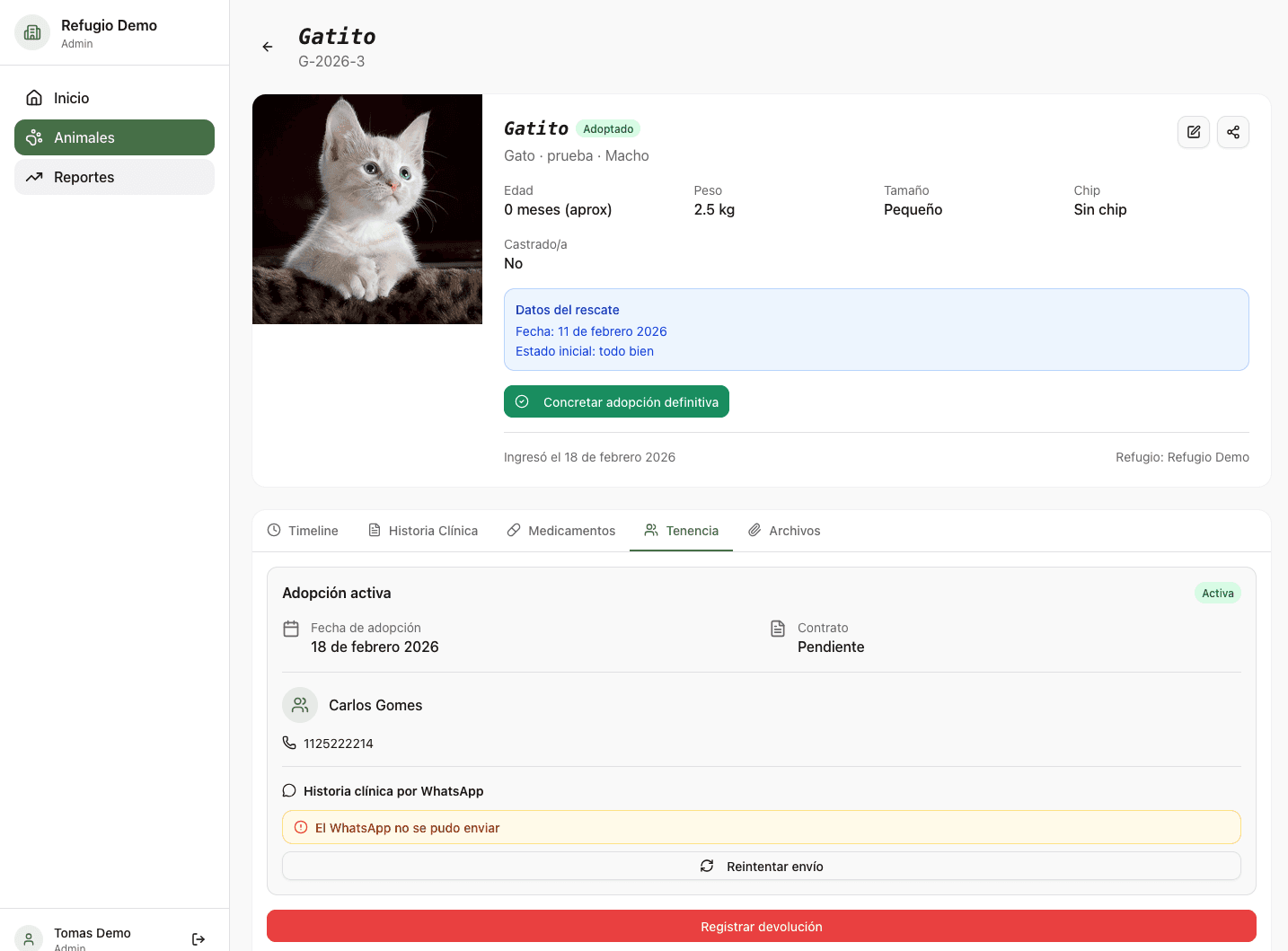
- ✓WhatsApp-first: the record travels as a link, nothing to install
- ✓Rescue group partnership model designed
- ✓Initial UI and product spec
Built: the MVP
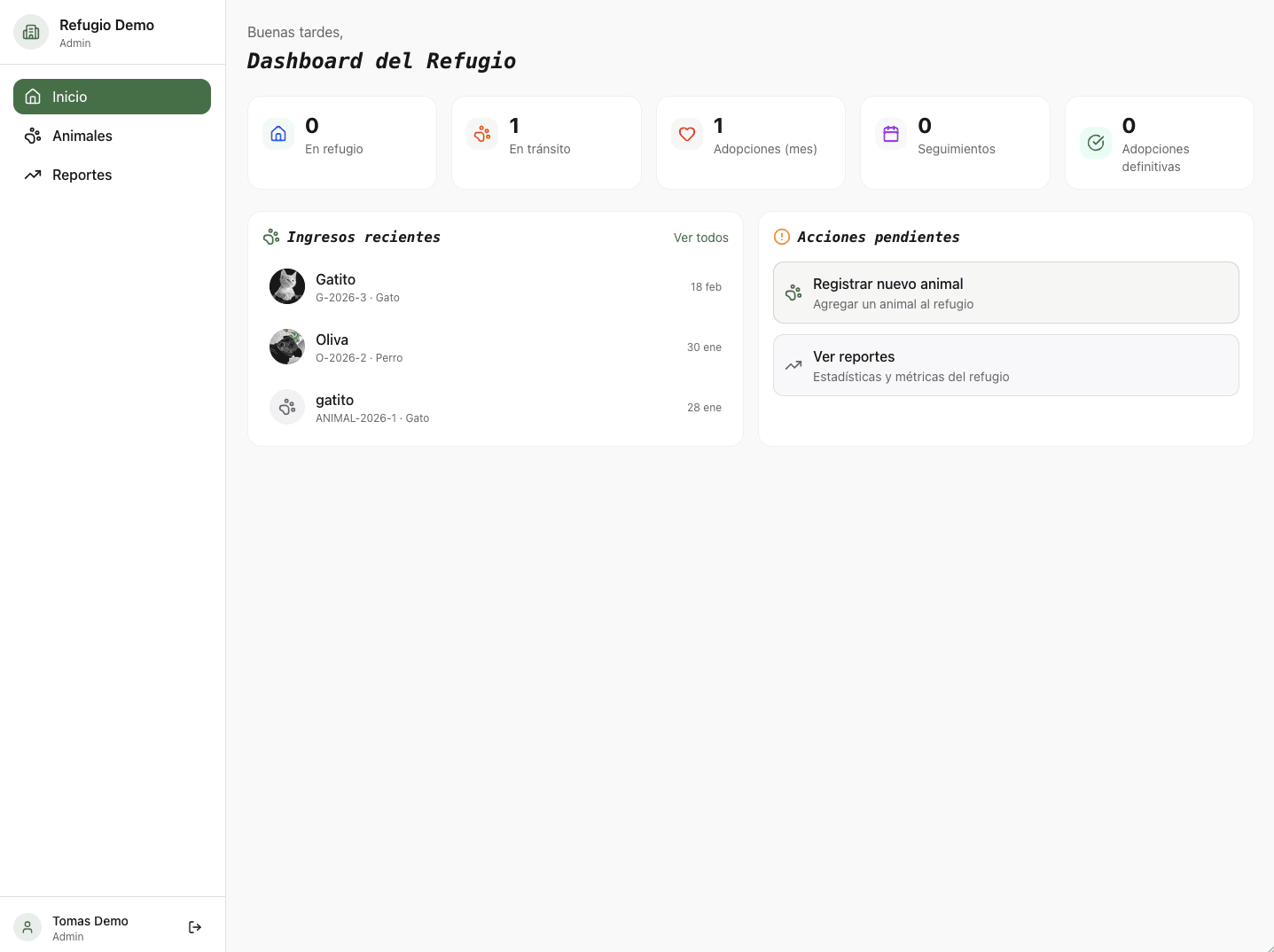
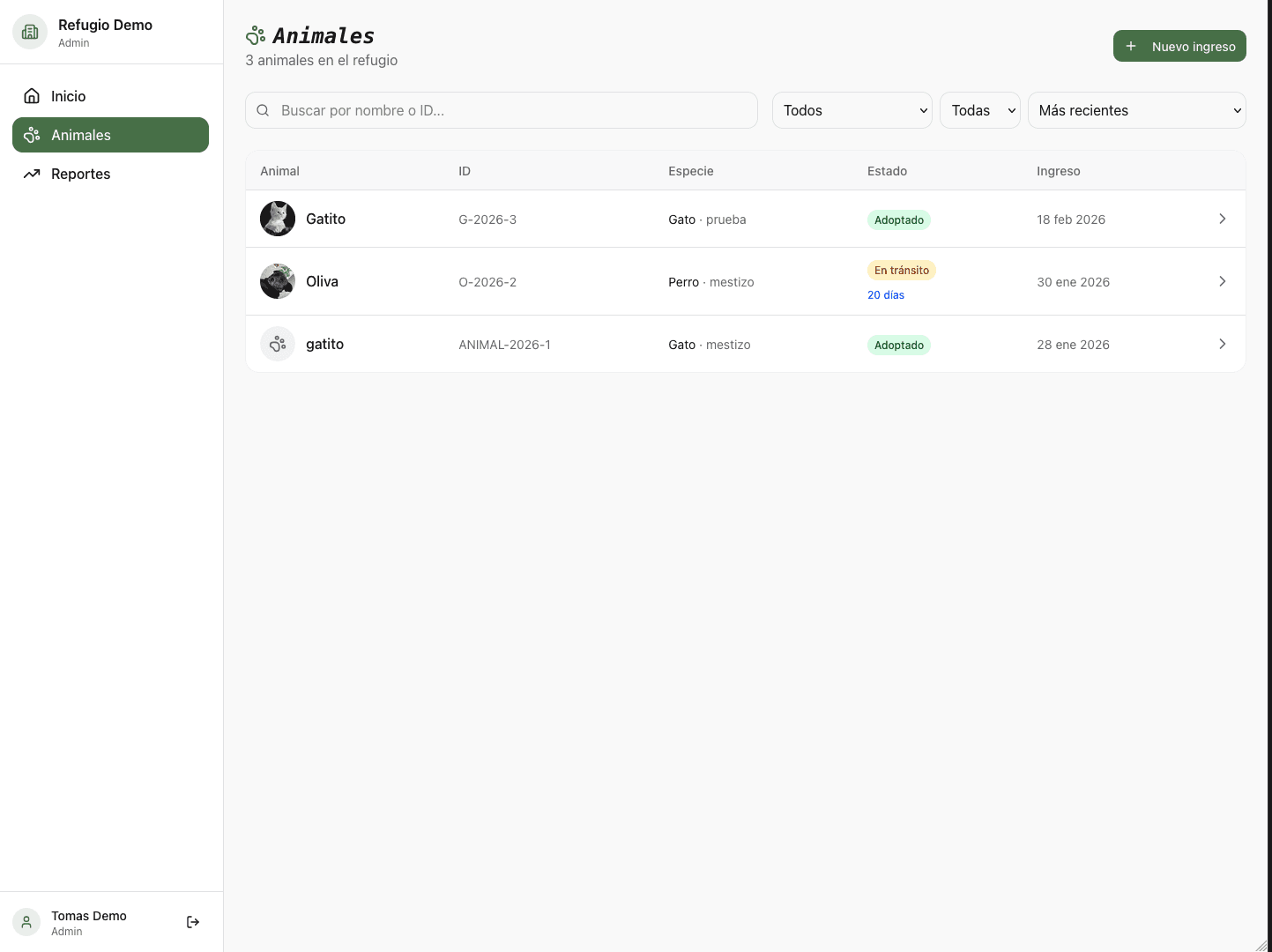
- ●Animal intake
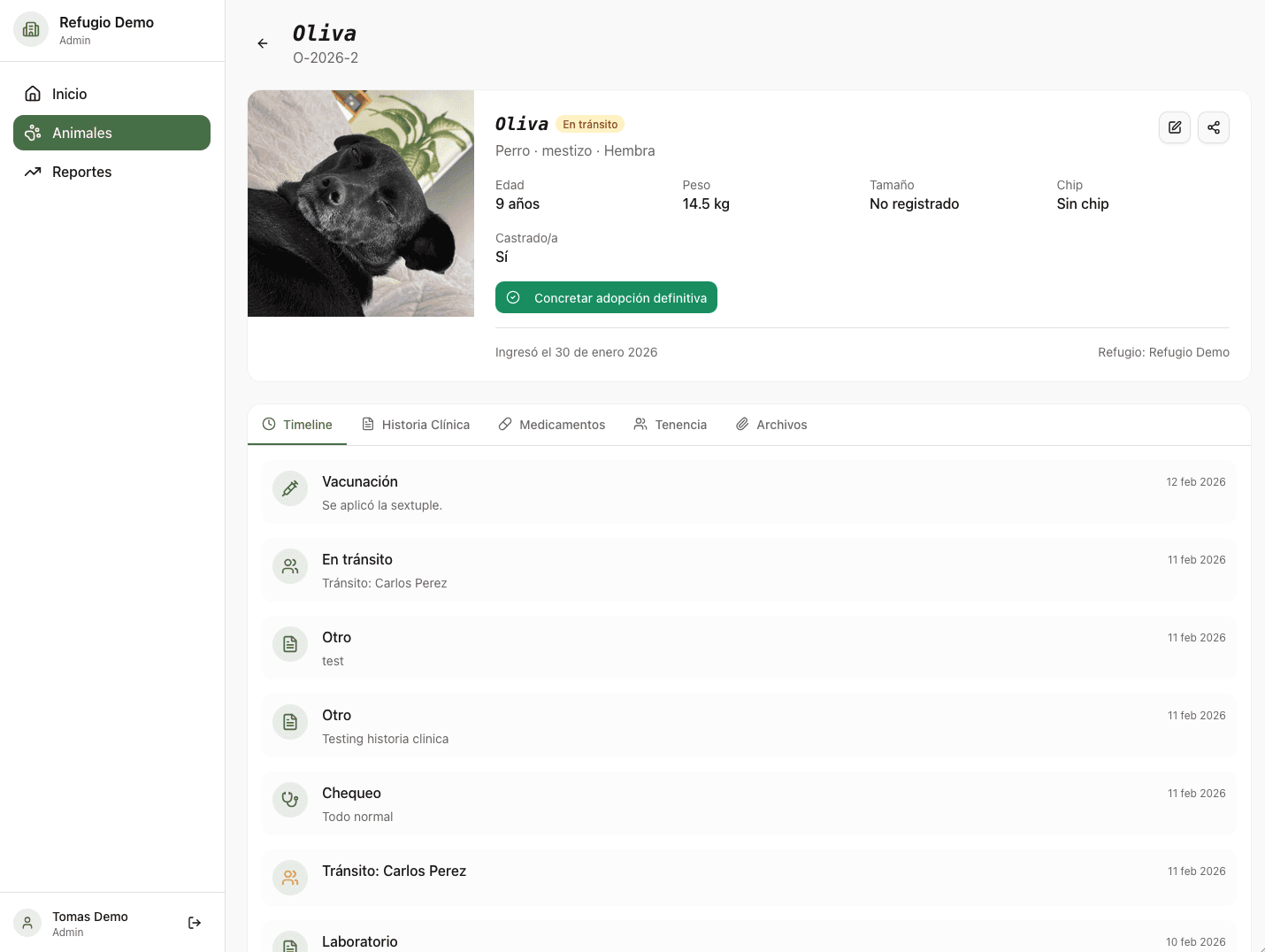
- ●Health records and medication
- ●Foster care and adoptions
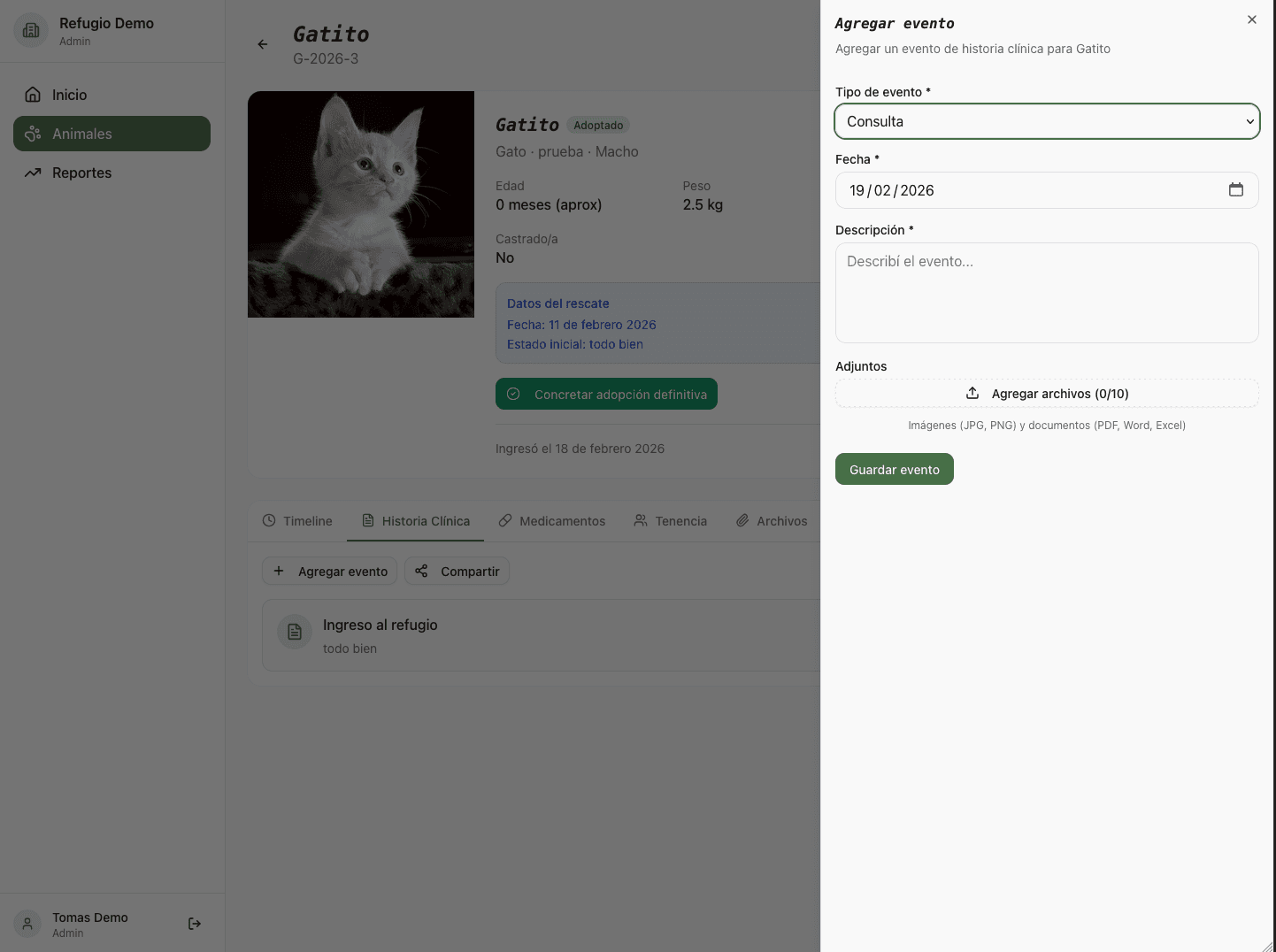
- ●The record, shareable as a link
Paused
- ○For vets, a waiting list
- ○The project is paused
A look inside Tend
What we know so far
What Worked
Starting with the ecosystem, not the product
Interviewing shelters, vets, and adopters before writing a single spec surfaced the WhatsApp insight that became the product's core architecture.
Framing the record as a gift
This reframe changed the entire product tone: from obligation to care. It made the shelter-side experience feel meaningful, not bureaucratic.
Designing for the real channel
WhatsApp isn't just a distribution choice; it's a design constraint that forced simplicity. No onboarding flows. No account creation. Just a link.
Designing for users with different verification capacity
A vet can verify a vaccination record. An adopter cannot. The product had to work for both without patronizing the adopter or wasting the vet's time. This shaped most of the interface decisions about how data is shown, when, and to whom.
What's Uncertain
Will shelters adopt it?
Shelter staff are overworked and under-resourced. Even a 5-minute process might be too much during a busy adoption day. Only a pilot would answer this.
Revenue model
Free for shelters and adopters means the business model needs to come from somewhere else. Vet partnerships and premium features are hypotheses, not validated models.
Multi-stakeholder coordination
Getting shelters, adopters, and vets to all participate in the same system is a coordination challenge. Each has different incentives and different tech comfort levels.